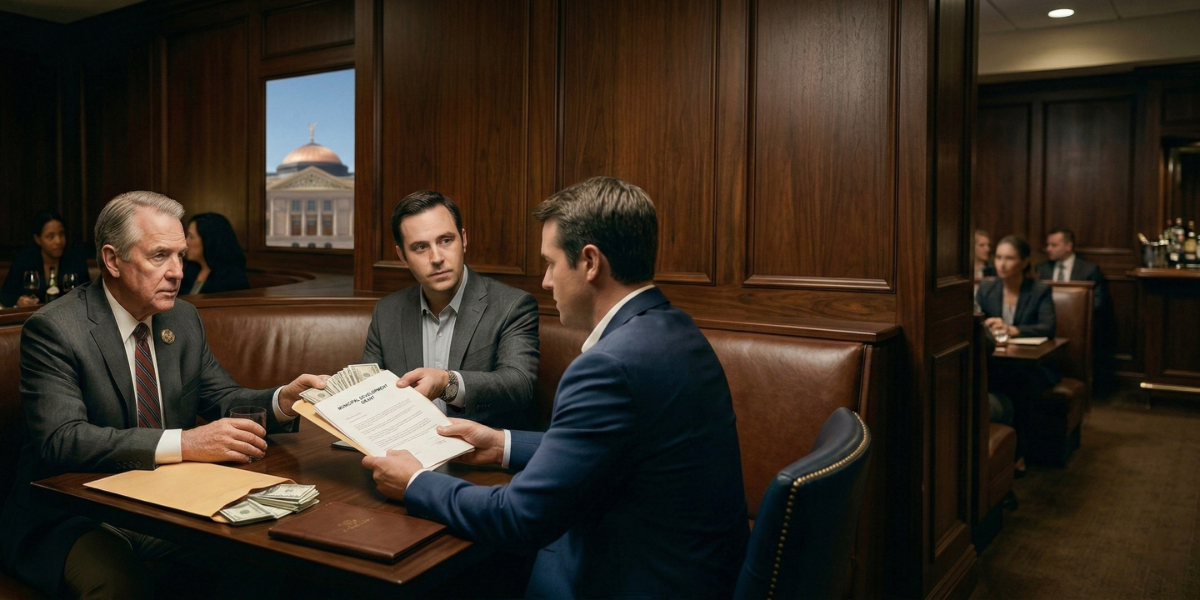
Bribery Charges in Arizona: A Closer Look at Public Corruption and Political Crimes
The issue of bribery in Arizona is both a hot-button legal debate and a challenging subject for those caught in its tangled issues. With accusations that can upend careers and tarnish reputations even before formal charges are filed, it is important to work through the legal context, examine the evidence, and understand how both public corruption and commercial bribery matter to Arizona’s legal landscape. This opinion editorial aims to dive in and take a closer look at the state's key bribery statute—ARS 13-2602—and provide insights into the nerve-racking world of political crimes and public corruption.
Arizona’s bribery law stands out for its wide reach. It covers not only those who offer a bribe but also the public servant or party officer who solicits or accepts an advantage. Whether it is money, travel, event tickets, or favors such as a “consulting” fee, anything of value may be classified as a benefit if it is linked to influencing an official act. The law is not limited to high-profile figures; rather, it protects the integrity of the entire public sector, from elected officials to government employees at various levels. In short, the statute is designed to capture any twisted attempt to skew decisions by introducing a benefit with a hidden agenda.
Exploring the Tricky Parts of ARS 13-2602 and Public Corruption Charges
When it comes to navigating the confusing bits of Arizona’s bribery statute, the main focus is on ARS 13-2602. This statute pinpoints key issues: offering something of value, the timing of the benefit, and the supposed link between the benefit and an official act. For many, the legal landscape is made even more intimidating by the statute’s clear yet twisty language. Even if the targeted public servant has not yet assumed office or is not qualified in a strict legal sense to act on specific matters, the state may press charges if there is evidence of a corrupt agreement.
Critics argue that this “no defense” language limits arguments that the person influenced was not qualified to deliver an outcome. In practice, a case often builds on subtle details such as text messages, emails, payment records, and witness statements. These small distinctions can end up becoming the crux of an investigation that is both nerve-racking and full of problems for those accused of wrongdoing.
Understanding the Hidden Complexities of a Benefit in Bribery Allegations
One of the defining elements of a bribery case is establishing what constitutes a “benefit.” In real-world legal analysis, the benefit may appear as something as straightforward as a cash payment or as nuanced as a promise of a family member’s employment. The determination often rests on intricate, sometimes conflicting interpretations of intent and timing.
Many times, investigators look at the following components to establish that a benefit was provided with the purpose of swaying an official act:
- Timing: Was the benefit offered right before a crucial decision, or was there an unusual delay that hints at a hidden motive?
- Mode of Communication: Do text messages or emails reveal coded language indicating an unspoken agreement?
- Type of Benefit: Does the advantage take the form of money, lavish gifts, or promises of future engagement?
- Context of the Interaction: Were the communications casual or laden with allusions to potentially improper conduct?
Understanding these the little details is key: the so-called “benefit” is not simply a kind gesture or an act of goodwill. Instead, it is framed as a tactical move intended to purchase influence. When a discussion ventures into these complicated pieces, the legal system scrutinizes every nuance to decide if the benefit was indeed a form of corruption.
Public Servants and Party Officers: Who Is at Risk?
Arizona takes a broad view on who qualifies as a public servant. The law doesn’t confine itself to high-ranking elected officials. Instead, it extends to any employee or officer involved in governmental actions. This can include law enforcement officers, procurement staff, building inspectors, and even some advisors or consultants who serve in a quasi-official capacity.
This broad definition is at the heart of many controversial cases. For instance, if a building permit inspector is alleged to have accepted a benefit in exchange for expediting a permit, the scrutiny goes beyond just the monetary value — it calls into question the entire integrity of public service systems. Arguments often revolve around subtle parts of what constitutes “official acts” under the statute.
When a government official or employee is accused, the state asserts that the individual’s vote, judgment, or discretionary decision was the intended target of the benefit. This means that even a minor action, if linked to the acceptance of a benefit, might be scrutinized under ARS 13-2602. The ripple effects of such allegations can be overwhelming, especially because the statute’s language makes it very clear that the actual ability to affect change is not a necessary factor when establishing a bribery charge.
Evaluating Evidence: The Nitty-Gritty Details of a Prosecutor’s Case
In most bribery cases, the prosecution builds its story on a mosaic of evidence rather than on any single piece. The document trail becomes the battleground where each thread of communication is unraveled. Among the critical pieces of evidence are phone records, emails, bank statements, and even calendar entries. Each piece is analyzed to determine if there is a clear connection between the benefit provided and the public servant’s official action.
The key elements that prosecutors look for in these cases include:
- Communication Indicators: Specific phrases or language that indicate an understanding or an agreement. Even a few lines in a text message can be interpreted as an agreement.
- Financial Records: Evidence that funds or other types of benefits were transferred under conditions that suggest a quid pro quo.
- Timing Correlations: How the timeline of communications aligns with the timing of decisions made by the public servant.
- Witness Statements: Testimonies that may come from insiders who later agree to cooperate with the prosecution, which sometimes complicates the narrative.
Below is a table summarizing the common evidence map in such cases:
| Type of Evidence | Purpose | Potential Pitfalls |
|---|---|---|
| Text Messages/Emails | Showcase language indicating a potential deal | Can be interpreted in different ways; context is key |
| Financial Records | Trace money or benefits exchanged | Hidden or miscategorized transactions can mislead |
| Calendar Entries | Establish timelines of communication | May be circumstantial without direct links |
| Witness Testimonies | Provide insider insights or confirmation | Witnesses may later reduce their exposure through plea deals |
Commercial Bribery Versus Public Corruption: Distinguishing Between Two Legal Worlds
While state law is busy addressing public corruption through ARS 13-2602, Arizona also criminalizes commercial bribery under ARS 13-2605. The two realms share similar themes but differ in context, affected parties, and potential penalties. In commercial bribery scenarios, the focus is on private-sector dealings—where vendors might offer under-the-table kickbacks to employees in exchange for business or preferential treatment.
In public corruption cases, the target is the decision-making process of public servants or party officers, while in commercial bribery the emphasis is on manipulative purchasing or business practices. Despite these differences, both forms are treated seriously because each undermines trust—be it in the government or in private commerce.
Some of the small distinctions between these cases include:
- Parties Involved: Public corruption charges typically involve government-bound actions, while commercial bribery involves private sector employees and vendors.
- Evidence Types: Public cases may rely more heavily on communications linking benefits to official actions; commercial cases might focus on invoices and contract alterations.
- Potential Consequences: Public corruption charges can lead to disqualification from holding public office, whereas commercial bribery can result in fines, restitution, or loss of business privileges.
Real-world examples of commercial bribery include instances where a vendor pays an employee off the record in hopes of securing a lucrative contract. Though this sounds akin to public corruption, the legal frameworks stand separate based on the context and the parties involved.
Penalty Exposure and Disqualification: The Long-Term Impact on Careers
What makes bribery charges so worrisome is not simply the possibility of a prison term. Under ARS 13-2602, individuals convicted of bribery can face long-lasting penalties far beyond the sentence itself. Arizona has stringent measures in place that can disqualify someone from holding public office and lead to forfeiture of their role if they are already in government service.
This type of consequence is especially nerve-racking for public officials who depend on trust and civic engagement to sustain their careers. Even allegations—before a conviction—can have a chilling effect on professional standing, licensure, and future employment prospects.
Some key points regarding penalty exposure include:
- Felony Classification: Most bribery cases fall under class 4 felonies, which carry substantial prison exposure.
- Disqualification from Office: A conviction may lead to immediate disqualification from any public service roles, undermining a career that has taken years to build.
- Collateral Consequences: Beyond the courtroom, a bribery conviction can hinder professional licensing, affect political aspirations, and damage an individual's reputation permanently.
These outcomes underscore the importance of early legal representation. When charges are on the horizon, it becomes essential to work with an attorney who can help steer through the procedures, manage evidence, and craft a defense strategy that focuses on the absence of corrupt intent.
Defense Strategies: Working Through the Legal Labyrinth of Bribery Cases
Facing bribery charges means entering a legal arena that is loaded with problems and nerve-racking procedures. For a defendant, the primary objective is to challenge the prosecution’s claims beyond a reasonable doubt. Many defense strategies center on discrediting the prosecution’s interpretation of what constitutes a “benefit” or a “deal.”
Experienced criminal defense attorneys often adopt the following tactics:
- No Corrupt Intent: Point out that the financial transaction, gift, or favor was not intended to sway an official decision but was a legitimate, unrelated act.
- No Solid Proof of a Deal: Argue that text messages or emails have been taken out of context or do not provide concrete evidence of an agreement.
- Questioning Witness Credibility: Scrutinize the motives of cooperating witnesses who might be reducing their own exposure, thereby casting doubt on their testimonies.
- Challenging Evidence Collection: Challenge the legality or timing of search warrants and data collection that may have yielded crucial evidence.
- Alternative Explanations for Official Actions: Demonstrate that the decision in question was influenced by routine policy considerations rather than any improper benefit.
The legal defense in bribery cases is all about figuring a path through the small distinctions in intent, context, and evidence. An effective defense will attempt to reveal that what might appear to be a bribery deal was, in fact, nothing more than a series of misunderstood communications or a misinterpreted routine decision.
Key Insights from an Arizona Bribery Defense Perspective
Lawyers specializing in these matters understand that every detail can be a make-or-break factor in court. With years of experience on both the prosecution and defense sides, legal experts know exactly which subtle parts may sway a case one way or another. Some key insights include:
- Early Intervention: Engaging legal representation at the earliest sign of trouble is super important because early steps can shape the entire narrative that investigators build.
- Communication Management: It is critical for clients to refrain from discussing their case publicly or with unauthorized individuals, as even offhand remarks can be utilized against them.
- Thorough Evidence Review: Every piece of documentation must be analyzed, no matter how insignificant it may seem. The defense must be prepared to question every email, text message, or transaction record.
- Effective Challenge of Searches: If evidence was obtained through questionable means, the defense must be willing to get into legal motions to suppress such evidence.
These points are not just theoretical: they are derived from years of practice, managing tricky cases that are full of problems and often riddled with tension. Attorneys who have spent time understanding every fine shade of legal evidence are the ones best equipped to help someone who is facing serious charges.
Understanding the Fine Points of Political Bribery and Campaign Activity
The world of political bribery is not far removed from that of commercial bribery, but with one key difference: the political arena is highly visible. Political donations, campaign contributions, and other donations may sometimes cross the line if they are seen as an attempt to secure political favors or outcomes. The boundaries here are delicate, and the devil is in the details.
Political contributions become especially contentious when the timing and circumstances suggest that they were intended to influence a decision or policy change. For instance, if a large donation arrives shortly before a key vote or policy shift, prosecutors will often be suspicious. Even if the donation is lawful and within the limits of campaign finance laws, the perception of impropriety can trigger an investigation.
For those involved in political campaigns, it becomes critical to work with experts who can carefully examine all aspects of the transaction. This means providing thorough documentation regarding the source of funds, the purpose of the donation, and the timing relative to government decisions. Such defensive measures can help clarify that the donation was not a bribe but a legitimate political contribution.
Real-World Examples: When Bribery Allegations Strike Close to Home
One real-world example involves a state legislator who is approached by a lobbyist offering a paid “consulting” contract for a relative in return for a favorable vote on a controversial bill. Though on the surface this might seem like a routine political maneuver, prosecutors could argue that there was a clear understanding: the consulting fee was intended to influence the legislator’s vote. Even if the legislator ultimately votes along party lines regardless, the mere appearance of a quid-pro-quo may trigger charges under ARS 13-2602.
Another scenario could involve a business owner waiting on a crucial inspection. If an inspector is seen as having accepted a personal favor or benefit—say, a promise of future employment for a family member—the situation might be examined under the lens of bribery allegations. Such examples underscore how even everyday interactions can take on new significance when they occur within the context of governmental decision-making.
Long-Term Implications for Careers: The Steep Price of a Bribery Conviction
The consequences of a bribery conviction extend beyond the courtroom, affecting personal and professional lives in profound ways. For public officials, facing a bribery allegation can be the difference between a long-standing career and disqualification from public service. Even if no actual prison time is imposed, the label of “bribery” carries a heavy social and professional stigma that can be off-putting to voters, employers, and future colleagues.
Many argue that for public servants, the risk of arrest and conviction is not just about legal penalties—it’s about the loss of trust from the very people they serve. In a community where transparency and integrity are expected, any suggestion of corruption can lead to widespread public disdain. This societal pressure can often exacerbate the legal proceedings, turning what might be a technical matter into a nerve-racking headline-grabbing affair.
In some cases, even if the final legal outcome is in the defendant’s favor, the process itself is so overwhelming and full of problems that the fallout extends far beyond the legal verdict. Professionals facing these charges might find it difficult to secure future employment, or they may be forced to step away from public responsibilities altogether.
Legal Defense Strategies for Arizona Bribery Charges: A Step-by-Step Rundown
For individuals charged with bribery in Arizona, a thoughtful and proactive defense strategy is essential. Here is a step-by-step rundown of some of the most effective techniques employed by seasoned criminal defense attorneys in these cases:
- Immediate Legal Consultation: The moment allegations arise, engaging an experienced public corruption or political crime attorney is key. Early representation allows the defense to shape how evidence is collected and interpreted.
- Comprehensive Evidence Review: Gather every piece of available evidence—from digital communications to financial records. The defense must poke around all such records for any indications that the alleged benefit was part of a legitimate transaction rather than an attempt at bribery.
- Challenge the Prosecution’s Narrative: Work to highlight the subtle differences between routine interactions and illegal agreements. This may involve demonstrating that the benefit was provided without any corrupt intent.
- Examine Search Procedures: If evidence was obtained through searches or warrants, question whether these were conducted legally and appropriately. Any irregularity can be grounds for evidence suppression.
- Discredit Key Witnesses: Many bribery cases hinge on the testimony of cooperating witnesses. The defense can scrutinize these witnesses’ credibility, motivations, and potential biases.
- Present Alternative Explanations: Sometimes, the best strategy is to offer a different interpretation of the facts—showing that the official action was simply a part of normal administrative processes rather than evidence of a corrupt exchange.
These methods illustrate that even in situations where the evidence might seem overwhelming, there are numerous angles from which an experienced attorney can figure a path through the legal maze. The goal is to create a narrative that is as robust and nuanced as possible, ultimately casting doubt on the prosecution’s simplified portrayal of events.
Frequently Asked Questions on Bribery and Public Corruption in Arizona
The legal arena surrounding bribery charges is full of questions. Below are some of the key FAQs that arise frequently and the answers that attorneys specializing in these cases typically offer:
- What exactly constitutes bribery under ARS 13-2602? The statute involves either offering or promising a benefit to a public servant or party officer with the intent of influencing their official decisions. This includes tangible items such as cash or gifts, and can even cover favors or promises of future benefits.
- Can someone be charged if the benefit was never actually given? Yes. Under the statute, even an agreement or promise to confer any benefit can be enough to warrant charges, as long as the intent to influence is clear.
- Does it matter if the public servant was not in a position to act? Not really. The statute explicitly states that it does not matter if the affected person was not qualified to perform the requested act, which means the charge can proceed regardless of that factor.
- How is commercial bribery different? In commercial bribery cases under ARS 13-2605, the focus is on the exchange of benefits in a private-sector environment, often involving kickbacks between a vendor and an employee. Although the themes are similar, the legal frameworks and typical consequences vary.
- Why is early legal representation considered super important? Early intervention can help manage the initial narrative, preserve critical evidence, and prevent missteps that might otherwise be used against the defendant in court.
Policy Implications and the Future of Anti-Corruption Measures in Arizona
The debate over what constitutes corruption and how best to combat it is a heated one both in Arizona and across the nation. Given the increasing reliance on digital communications and the rapid pace of modern business, the legal definitions of “benefit” and “official act” are evolving. Many experts worry that the legal framework may sometimes capture routine administrative or business interactions, thereby risking the misinterpretation of standard practices as criminal behavior.
On the other hand, proponents of strict anti-corruption laws argue that the broad definitions are necessary to safeguard public trust and maintain integrity in government. In an era when information can be spread quickly and public sentiment can be highly volatile, the need for clear and enforceable standards cannot be overstated. As such, legislators face the continuous challenge of crafting laws that both prevent crime and allow for legitimate public and private exchanges.
Public policy must strike a careful balance. Ensuring accountability without stifling legitimate forms of engagement requires lawmakers to consider every twist and turn in how benefits are provided and accepted. The evolving nature of public interactions—especially through social media and other online platforms—demands a vigilant approach to updating these laws to reflect changing societal norms.
Arizona Bribery Defense Strategy: Expert Tips for Protecting Your Rights
For those suddenly thrust into the center of a bribery investigation, the first step is to secure an attorney who is not only an expert in Arizona criminal law but also familiar with the subtle details of corruption cases. The following are expert tips to help protect your rights while you work through the challenges posed by such an investigation:
- Document Everything: Keep records of all communications, receipts, and interactions that may relate to the case. Even seemingly mundane details can help demonstrate that no corrupt intent existed.
- Avoid Casual Conversations About the Case: Any offhand remarks can be used against you. It is best to limit communication about the case until after legal counsel has provided clear guidance.
- Consult a Specialist Immediately: Time can be of the essence. Lawyers who have handled multiple bribery cases know which angles to pursue and which evidence might be potentially damaging.
- Review Digital Footprints: Today, a large portion of evidence is digital. An attorney might advise on how to handle or even challenge emails, social media interactions, and other digital records.
- Prepare for the Long Haul: Understand that defending against bribery charges can be a drawn-out process. Having realistic expectations and a solid legal strategy in place is key.
These tips are not only for those already facing charges but also offer a cautionary note to anyone engaging in public service or closely tied to political processes. Being aware of what might be misconstrued and how to document normal transactions may safeguard you in situations where your every move is scrutinized.
Conclusion: The Critical Role of Early Representation and Informed Defense
The world of bribery charges in Arizona is marked by its challenging parts and subtle twists. With allegations that can rapidly escalate into career-threatening endeavors, it is essential for anyone involved in a potential bribery case to engage an experienced legal team at the earliest opportunity. Whether dealing with public corruption under ARS 13-2602 or commercial bribery under ARS 13-2605, the importance of understanding the fine points, timing, and context cannot be overstated.
In a field that is as nerve-racking as it is full of problems, early intervention is not merely super important—it is often the difference between a manageable legal issue and a case that spirals out of control. By diving into the evidence, challenging the details, and preparing a solid defense strategy, defendants in these cases can begin to untangle the complex web of allegations that surround bribery charges.
Ultimately, the thrust of any successful defense lies in exposing the lack of genuine corrupt intent while emphasizing that routine administrative or commercial exchanges are being misinterpreted. The legal community continues to debate the appropriate thresholds and evidence required in such cases, and as Arizona’s legal landscape evolves, so too must the strategies employed by defense attorneys.
For those caught in the crosshairs of a bribery investigation, the path forward may be filled with intimidating and nerve-racking challenges. However, armed with a clear understanding of the statute, the impacts on career and reputation, and effective defense strategies, it is possible to work through the legal maze. Early legal consultation, comprehensive evidence analysis, and a methodical approach to defense remain super important elements of a robust strategy against bribery allegations.
In closing, Arizona’s approach to tackling bribery—whether through the public corruption lens or in the commercial sphere—offers a cautionary tale: that even the smallest benefit can have enormous consequences when linked to public decision-making. As debates over public integrity and private rights continue to evolve, the need for clear, reasoned, and fair legal processes remains more critical than ever.
For anyone facing or even suspecting a potential investigation, it is essential to secure advice from a seasoned legal professional who can help figure a path through the numerous twists and turns of the law. By staying informed and acting decisively, defendants can safeguard both their personal integrity and professional futures in an environment where every detail matters.
Read more about this topic at https://kolsrudlawoffices.com/bribery-charges-in-arizona-public-corruption-and-political-crimes/
Related articles you might like
13-2602 - Bribery of a public servant or party officer
Bribery Defense Attorney in Phoenix | Free Consultation


0 Comments