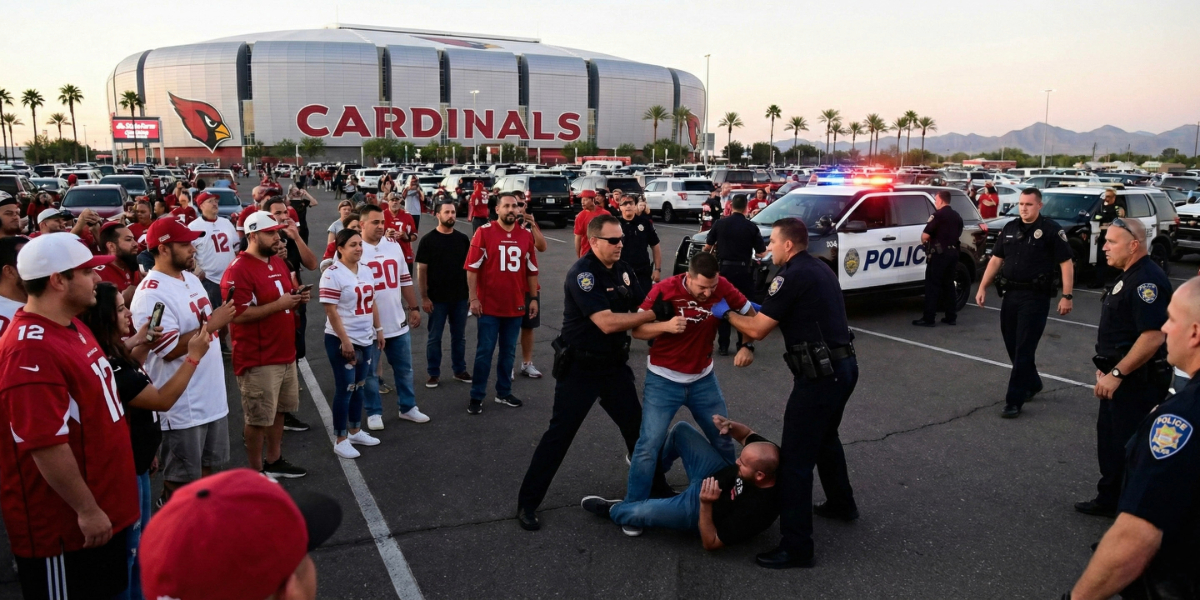
Aggravated Assault at Arizona Sporting Events: An Opinion Editorial
Large sporting events in Arizona are a melting pot of passion, excitement, and sometimes volatile emotions. Whether it’s the heated rivalry at a Cardinals game in Glendale or a Suns playoff run in Phoenix, the atmosphere is charged with enthusiasm. However, when emotions and alcohol mix, even a small disagreement can spiral into a serious criminal matter. In this opinion editorial, we take a closer look at Arizona’s assault laws as they apply to large sporting events, the tricky parts of legal interpretation, and the potential consequences that a seemingly minor scuffle can have on an individual’s future.
Understanding Arizona Assault Laws at Sports Venues
Before we analyze specific scenarios, it’s important to understand how Arizona law defines assault and what causes a simple assault to transform into an aggravated charge. The initial legal framework may seem confusing, but breaking down the key points helps shed light on these twisted pieces of legal procedures.
Definition of Simple Assault and Its Consequences in Arizona
Under Arizona Revised Statute (ARS) 13-1203, simple assault is defined as intentionally, knowingly, or recklessly causing physical injury to another individual. Even the act of making someone reasonably fear imminent physical harm or touching another person in a provocative manner qualifies as assault. In many cases, such an offense is charged as a misdemeanor.
This misdemeanor charge, though it might appear minor—often carrying penalties like short jail time, small fines, and probation—can have long-lasting repercussions. These include potential orders of protection and, in some instances, even restrictions on firearm use, all of which can be nerve-racking for those involved. The law, which may seem off-putting at first glance, leaves many people wondering how a momentary lapse can escalate into a serious legal tab.
When Simple Assault Transforms into Aggravated Assault
The shift from a simple assault to an aggravated assault occurs under ARS 13-1204. This statute outlines specific conditions that, when met, elevate a seemingly minor altercation to a felony-level offense. The details can be tangled, but understanding the fine points is essential:
- Serious Physical Injury: Injuries that substantially risk death, cause significant disfigurement, or lead to long-term impairment fall under this category. These are the types of injuries discussed in ARS 13-105.
- Use of a Deadly Weapon or Dangerous Instrument: An everyday object can be considered dangerous if used in a manner likely to cause serious harm. Items such as beer bottles, folding chairs, or even vehicles in a parking lot have all been implicated.
- Assault on Certain Protected Persons: If a person assaults a peace officer, firefighter, teacher, healthcare worker, or any other protected individual while they are performing official duties, the charge is automatically more severe.
- Assault in Certain Environments: Entering someone’s home and then committing assault, or assaulting an incapacitated or restrained person, also triggers a higher level of charge.
As this list shows, the moments that tip the scales are many and often subtle. A sport event altercation may start with a simple shove, but if one of these aggravating factors is present—even inadvertently—the scuffle can quickly become a felony offense.
Real-World Sporting Event Scenarios That Escalate into Felony Charges
Sports events in Arizona are renowned for their high energy and fervor, but they are also environments where the potential for physical confrontation is high. Let’s take a closer look at several common scenarios in which a minor dispute may spiral into a felony charge:
Tailgate Disputes and Parking Lot Altercations
Pre-game tailgates and post-game parking lots can quickly become charged atmospheres. Here are a few examples of what might occur:
- Parking Disputes: Disagreements over parking spaces can escalate quickly. A shove or a punch—if it results in a significant injury—can be classified as aggravated assault.
- Tailgate Tensions: Amid heated discussions about team rivalries, a push that causes someone to hit a hard surface (like a car bumper) may be reclassified as felony aggravated assault if the injury is serious.
These situations remind us that what might seem like a minor scuffle can have twisted legal consequences, especially when the injury meets the statutory definition of serious physical harm. Using everyday objects in the heat of the moment might turn those objects into dangerous instruments in the eyes of the law.
Bar Fights After the Game
After the game, fans often head to nearby bars to celebrate the win—or commiserate a loss. However, these gatherings are sometimes laden with issues that can lead to violent encounters:
- Improvised Weapons: In the din of a bar fight, objects like pool cues, bar stools, or even bottles can be used as weapons. The use of such items can instantly upgrade the assault charge.
- Alcohol-Fueled Confrontations: Under the influence of alcohol, a minor disagreement can turn violent in seconds, making it challenging for law enforcement to decide on the appropriate charge.
- Intervention Complications: Sometimes, bystanders attempting to break up a fight might be caught in the crossfire, complicating the matter further.
It’s a nerve-racking reality that the line between a simple sporting dispute and a felony assault can be very thin. These examples illustrate how everyday objects and alcohol can twist legal situations into highly charged and dangerous scenarios.
Confrontations with Security and Law Enforcement
Security personnel and police officers at sporting events are tasked with maintaining order. When a private citizen reacts physically to these officials trying to perform their duties, the consequences can escalate quickly:
- Assault on a Peace Officer: Even indecent physical contact or a push against a uniformed officer may result in an aggravated assault charge classified as a serious felony.
- Heightened Impact of Actions: The act of resisting or interfering with law enforcement is viewed with extra severity by the legal system, contributing to an escalation in charges.
In these cases, legal penalties are strict, due not only to the physical act but also to the tension generated by the confrontation with those charged with protecting public safety.
Key Legal Considerations and Penalties for Aggravated Assault Charges in Arizona
The legal penalties for an aggravated assault charge in Arizona are extremely serious. Understanding the sentencing guidelines is super important for anyone in a similar circumstance. The penalties depend on several factors such as the degree of injury, the risky use of an object, a person’s criminal history, and of course the exact circumstances of the incident.
Felony Classifications and Their Associated Penalties
Aggravated assault is always a felony in Arizona, and the severity of the charge is determined by the specific aggravating circumstances. The following table provides an overview of the potential sentencing ranges for first-time offenders:
| Felony Class | Typical Circumstances | Prison Range for First Offense | Relevant Statutes |
|---|---|---|---|
| Class 2 Felony | Serious physical injury or use of a deadly weapon | 7 to 21 years | ARS 13-1204(A)(1),(2); ARS 13-704 |
| Class 3 Felony | Temporary but substantial disfigurement | 5 to 15 years | ARS 13-1204(A)(3); ARS 13-702 |
| Class 4 Felony | Assault on a peace officer or protected victim | 4 to 8 years | ARS 13-1204(A)(8) |
| Class 6 Felony | Less severe aggravating factors | 1 to 2.5 years | ARS 13-1204(B) |
Beyond the prison time, individuals convicted of felony aggravated assault in Arizona face steep fines—sometimes up to $150,000—along with probation, restitution orders, and the permanent stigma of a felony record. For many, the thought of these outcomes is overwhelming and can affect future employment, reputation, and quality of life.
Defense Strategies in High-Stakes Sporting Event Altercations
When faced with a felony assault charge after an incident at a sporting event, the need to figure a path through the legal challenges is essential. The defense team’s work involves examining every single detail of the case, from the initial police interaction to witness statements, in order to build a strong, focused strategy. Here we explore some common defense approaches employed in these situations.
Self-Defense and the Absence of Intent
The concept of self-defense frequently serves as the cornerstone of many legal defenses in assault cases. Arizona law permits the use of reasonable force when someone believes they or others face immediate harm. If evidence shows that the defendant truly believed this force was necessary, prosecutors might struggle to prove that the actions were deliberately aggressive. Key points in a self-defense case include:
- Immediate Threat: Establishing that there was a clear and present danger.
- Reasonable Response: Demonstrating that the force used was proportional to the threat.
- Absence of Escalation: Arguing that the injury was accidental and not intended to cause severe harm.
When the defense successfully shows that there was no malicious intent, or that the injury was simply an unintended consequence of trying to protect oneself, the case may be significantly weakened. This kind of defense is particularly useful when the context of a crowded sporting event is taken into account.
Challenging the Dangerous Instrument Allegation
Another critical component of a strong defense is questioning whether the object used in the altercation truly qualifies as a dangerous instrument. The law does not automatically designate everyday objects as weapons; rather, the context of how they were used is what matters most. Defense attorneys may:
- Argue that the object was not used in a manner likely to cause serious injury.
- Bring in expert testimony to clarify that the object, when used in that specific context, does not meet the legal criteria to be deemed dangerous.
- Highlight any ambiguous aspects of the incident that create doubt about the prosecutorial classification.
By zeroing in on these subtle details, defense lawyers can introduce reasonable doubt and potentially reduce the severity of the charges.
The Importance of Early Legal Intervention
One of the key factors in successfully managing a felony assault charge is prompt and aggressive legal representation. Acting early allows an attorney to:
- Review critical evidence and police reports before any statements or filings are set in stone.
- Interview witnesses and secure crucial video footage that can be instrumental in clarifying what truly happened.
- Prevent irreversible damage to the defendant’s future by addressing potential legal missteps early on.
Because law enforcement at sporting events often makes snap decisions based on chaotic scenes, early involvement by a seasoned attorney can ensure that essential rights are protected right from the start.
The Broader Implications of Aggravated Assault Charges at Sporting Events
The consequences of an aggravated assault charge extend far beyond the immediate legal penalties. For many, such a conviction is a life-altering event. It has the power to impact a person’s employment prospects, social standing, and overall quality of life. The ripple effects of these charges are loaded with problems that tend to touch every aspect of a defendant's life. Here are several broader implications:
- Legal Record: A felony conviction is part of your permanent record, potentially complicating future job applications, professional licenses, and even personal relationships.
- Social Stigma: Beyond legal consequences, the societal judgment and personal embarrassment can be heavy burdens to bear.
- Financial Consequences: Heavy fines, court costs, and legal fees add up quickly, causing significant financial strain.
- Future Freedom: For those facing prison time, even a sentence as short as a few years can derail long-term career plans and personal goals.
- Mental Health: The psychological impact of being involved in a high-stakes legal battle can lead to stress, anxiety, and depression.
These far-reaching consequences serve as a reminder of just how super important it is to carefully consider one’s actions—even in the heat of the moment at a sporting event. What might seem like a small incident can evolve into a life-altering legal ordeal.
A Closer Look at Notable Cases from Arizona Sporting Events
Real-world cases illustrate the serious implications that can some times result from incidents at sporting events. Consider the following examples, where initially minor confrontations escalated into full-blown felony charges:
Example 1: A College Football Rivalry Gone Wrong
During a college football rivalry game in Tempe, what began as a verbal dispute in a crowded parking lot quickly evolved into a serious altercation. One fan, visibly agitated, pushed another. The impact led the victim to fall and strike their head on a nearby truck bumper, resulting in a skull fracture that required surgery. Despite the fact that the incident started as a mere shove, the injury met the criteria of serious physical injury under the law.
The prosecutor opted to charge the case as a Class 2 felony aggravated assault. This decision underscores the importance of even seemingly minor actions in environments that are filled with tension and unpredictable energy. When emotions run high, every move is scrutinized under the law’s fine points, leading to charges that can quickly escalate.
Example 2: The Fallout from a Post-Game Bar Fight
In another case in downtown Phoenix, a post-game celebration turned sour when rival fans clashed in a local bar. Things took a dangerous turn when one individual, in the midst of a heated argument, swung a metal folding chair. The chair struck another patron, inflicting deep lacerations that required emergency medical treatment. Given that the chair was used as an improvised weapon, prosecutors asserted that its use elevated the charge to an aggravated assault, classifying it as a dangerous instrument under Arizona law.
In both examples, the use of everyday objects in a high-adrenaline environment meant that actions which might have initially been brushed off as minor were ultimately viewed through the lens of aggravated assault. Such cases serve as a crucial warning that any physical confrontation at crowded events demands careful legal assessment and, if needed, swift intervention by an experienced defense attorney.
Balancing Public Passion and Legal Responsibility at Arizona Sports Events
At its core, the debate over assault charges at sporting events is about balancing public passion with individual accountability. Many fans attend games eager to celebrate and support their teams, and the energy is contagious. However, when that passion tips into aggression, the legal system must step in to maintain public order. This situation presents a tangled set of issues:
- Individual vs. Public Interest: On one hand, every fan’s personal freedom to express their enthusiasm is important. On the other hand, the community’s need for safety and order must not be compromised.
- Subjective Perception: What might be viewed as playful aggression in one instance can be interpreted as a serious assault in another. Ambiguity in witness accounts and rapidly evolving situations within crowded venues only exacerbate the problem.
- Impact on Justice: Quick decisions made by law enforcement in the heat of the moment can sometimes lead to charges that do not fully reflect the context, creating potential for miscarriages of justice.
This balance is not easy to achieve. It calls for a legal system that is both flexible enough to understand the small distinctions in each case and strict enough to protect individuals from unnecessary harm. As an observer, one can only hope that public policy continues to reflect both the spirit of community celebration and the necessity for legal clarity.
Legal System, Policy, and the Future of Sporting Event Safety
In examining these issues, it becomes clear that there is a need for continuous dialogue between lawmakers, law enforcement, and the public. The policies surrounding assault charges at sporting events must adapt to the modern realities of fan behavior and public safety. Here are a few points that merit further discussion:
- Clearer Definitions: Refining the legal definitions of what constitutes a dangerous instrument or serious physical injury can help reduce the number of cases that spiral out of control.
- Better Training for Officers: Providing law enforcement with improved training on handling chaotic environments can lead to more measured responses, ensuring that charges are appropriate and proportional.
- Community Outreach: Educational programs targeting fans can help raise awareness about the potentially overwhelming legal consequences of physical altercations.
- Enhanced Crisis Intervention: On-site conflict mediators and rapid intervention teams could help de-escalate situations before they require legal action.
These suggestions add a layer of thoughtful reflection to what appears to be an issue loaded with problems. A combined effort from all stakeholders might make sporting events not only places of high energy and excitement but also models of safe communal celebration.
Protecting Individual Rights in High-Stake Environments
Every individual has the right to enjoy the excitement of a sporting event without fear of an inadvertent legal quagmire. At the same time, maintaining public safety is super important. The role of a skilled defense attorney, especially one experienced in these scenarios, cannot be overstated. Here are several measures that can help protect personal rights:
- Prompt Legal Guidance: Early consultation with a legal expert helps in understanding the situation’s little twists and preparing a defense before the situation escalates further.
- Review of Evidence: A detailed examination of surveillance footage, witness accounts, and physical evidence can often reveal the unintended nature of the incident.
- Constitutional Safeguards: If law enforcement procedures overstep constitutional boundaries—for example, through an unlawful search or seizure—key evidence might be excluded, potentially weakening the case against the defendant.
A seasoned attorney can work on strategies such as proving self-defense, disputing the extent of injuries, or challenging the characterization of an object as a dangerous instrument. These legal measures help ensure that the defendant’s rights are preserved even in cases where public emotions run high.
The Role of Media and Public Perception
In today’s age, media coverage plays a powerful role in shaping public opinion about legal issues at sporting events. Sensational headlines and selective reporting often do not capture the fine shades of legal reality, inadvertently adding pressure on both the prosecution and defense. Some of the common effects include:
- Public Pressure: Negative media coverage may sway a prosecutor’s decision or cast the accused in a harsh light, even before a trial concludes.
- Misunderstandings: Reports that oversimplify the law can leave the public with a distorted view of what constitutes a felony versus a misdemeanor.
- Legacy and Reputation: In the age of social media, even a pending charge can significantly tarnish a person’s reputation, influencing future opportunities in ways that are difficult to reverse.
This media environment further complicates the already challenging task of finding one’s way through the legal system after an incident at a sporting event. It underscores the importance of a measured, well-informed legal defense that communicates the subtle details often lost in public debate.
Conclusion: Striking a Balance Between Passion and Legal Prudence
The landscape of athletic events in Arizona is as vibrant as it is complex. The passionate outpouring of support for local teams is a cherished part of community life, yet when combined with high tensions and alcohol, it can lead to situations where a minor altercation escalates into a life-altering felony assault charge. As we have seen, the legal framework in Arizona is full of confusing bits and tricky parts that can fast track a seemingly minor dispute into a complex legal battle.
It is crucial for everyone—from fans to law enforcement—to take a closer look at how these situations are managed. Effective public policy, improved officer training, and clear legal definitions all play significant roles in ensuring that justice is served without infringing on the right to celebrate and express enthusiasm safely. Meanwhile, for individuals caught in a moment of overwhelming tension, understanding their rights and seeking early, aggressive legal counsel is super important.
In our rapidly evolving legal and social landscape, striking the right balance between public passion and legal responsibility remains a key challenge. The legal system must manage the tension between protecting public safety and recognizing that not every altercation is born out of malicious intent. For those in the midst of these situations, the pathway through this maze of legal and social issues is neither simple nor straightforward—it requires both a deep understanding of the law’s little details and a commitment to protecting individual rights.
Ultimately, while sporting events are loaded with energy, they should remain venues of celebration and mutual respect. By ensuring that legal measures are proportional and that public policies are continuously refined to address the subtle complexities of modern social interactions, Arizona can continue to be a place where fans can cheer on their teams without fearing the punitive consequences of a momentary lapse in judgment.
This editorial is intended to inform and provoke thoughtful discussion about the challenging legal landscape that surrounds aggravated assault charges at sporting events in Arizona. It is a call for ongoing dialogue among lawmakers, law enforcement, legal experts, and the community at large—a push towards a future where the fine line between passion and legal accountability is navigated with fairness, clarity, and respect for individual rights.
By taking the time to dig into these issues, we can better understand the twists and turns of the legal processes that affect everyday fans, and push for reforms that make our communities safer and our celebrations more joyous. In an era where every action is scrutinized, ensuring that justice is both just and comprehensible is a task for all of us.
Read more about this topic at https://azcriminalandfamilylaw.com/aggravated-assault-in-arizona-at-large-sporting-events/
Related articles you might like
3 ways a misdemeanor turns into a felony
5 ways a misdemeanor can turn into felony charges


0 Comments